What Is AI Visibility? The Complete Beginner’s Guide for 2026
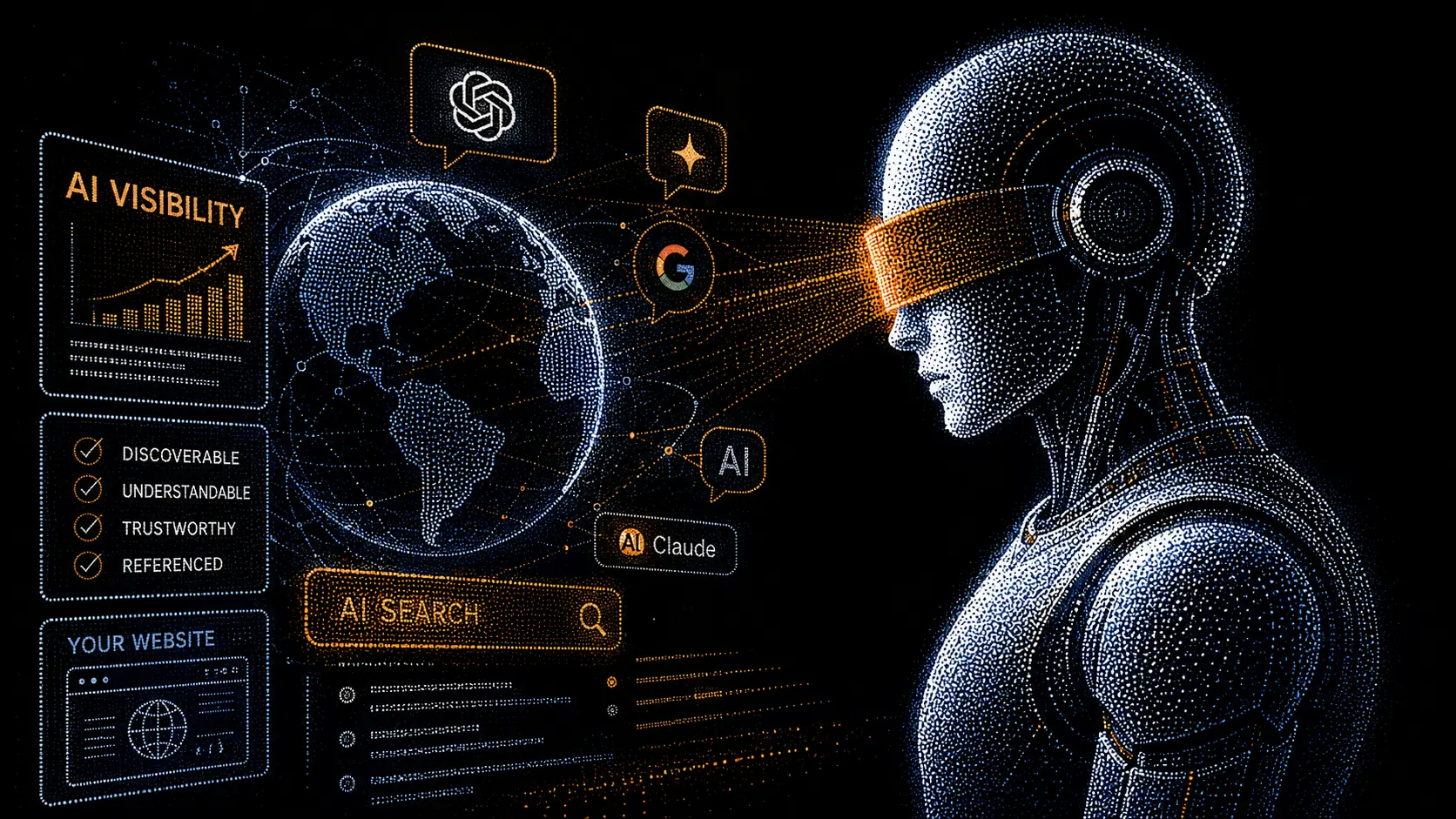
AI Visibility refers to how easily AI platforms such as ChatGPT, Gemini, Claude, Perplexity, and other AI-powered search systems can discover, understand, trust, and reference your website when generating answers for users. In simple terms, if someone asks an AI assistant a question related to your industry, AI visibility determines whether your website has a chance of being mentioned, recommended, or used as a source.
Search is changing faster than most website owners realize.
For more than two decades, businesses focused almost entirely on traditional SEO. The goal was simple: rank higher in Google, attract clicks, and convert visitors into customers.
Today, a new layer has been added to the search landscape.
Millions of users are now asking questions directly to AI assistants instead of searching through a list of blue links.
Questions like:
- What is the best project management software?
- Which AI SEO tool should I use?
- How do I improve my website’s AI visibility?
- What is GEO optimization?
- Which platforms help with ChatGPT SEO?
Instead of showing ten search results, AI platforms often provide a direct answer.
This shift creates a new challenge and a new opportunity for businesses.
If AI systems cannot understand your website, your content may never appear in those answers.
That is where AI Visibility becomes important.
Why AI Visibility Matters More Than Ever
Imagine two websites:
Website A
- Strong content
- Clear structure
- FAQ sections
- Schema markup
- Strong internal linking
- AI-friendly content
Website B
- Thin pages
- No structured data
- Weak navigation
- No topic authority
- Poor content organization
Which website do you think an AI system will trust more?
The answer is obvious.
AI models are designed to identify useful, trustworthy, and well-structured information. Websites that provide these signals have a better chance of being understood correctly.
This doesn’t necessarily mean AI will always mention your website, but it significantly improves your chances of becoming discoverable across AI-powered experiences.
The Rise of AI Search
Traditional search works like this:
User Search
↓
Google Results
↓
User Clicks Website
AI search increasingly works like this:
User Question
↓
AI Generates Answer
↓
AI May Reference Sources
↓
User Decides Whether To Visit
This change affects:
- SEO professionals
- Content marketers
- SaaS companies
- Agencies
- Local businesses
- E-commerce brands
- Publishers
Every business that depends on online visibility should pay attention.
What Makes AI Visibility Different From Traditional SEO?
Many people assume AI visibility is simply another name for SEO.
It isn’t.
SEO and AI visibility overlap, but they are not identical.
| Traditional SEO | AI Visibility |
|---|---|
| Focuses on rankings | Focuses on discoverability in AI answers |
| Optimizes for search engines | Optimizes for AI systems and answer engines |
| Success measured through rankings | Success measured through mentions, citations, and visibility |
| Depends heavily on search results pages | Depends on AI understanding and trust signals |
| Primary goal is clicks | Primary goal is discoverability and authority |
The strongest websites in 2026 will optimize for both.
You still need traditional SEO.
But you also need to ensure AI systems can understand your content.
A Simple Real-World Example
Let’s say you own a digital marketing agency.
You publish an article titled:
“How to Improve ChatGPT SEO for Small Businesses.”
The article includes:
- Clear explanations
- Step-by-step instructions
- Examples
- FAQ schema
- Internal links
- Strong topical relevance
When someone asks:
“How can a small business optimize for ChatGPT?”
AI systems are more likely to understand your content as a useful resource.
Now compare that to a thin 500-word article filled with keywords but little practical value.
Which one appears more trustworthy?
The answer is usually the more complete and helpful resource.
The Four Core Components of AI Visibility
Think of AI visibility as four layers working together.
1. Crawlability
AI systems need access to your website.
If your pages cannot be crawled, visibility becomes difficult.
Important factors include:
- Robots.txt configuration
- GPTBot accessibility
- Site architecture
- Internal linking
- Technical health
You can verify these signals using tools like the AI Crawlability Checker and GPTBot Checker available on LLMrush.
2. Content Understanding
AI systems need to understand:
- What your page is about
- Who the content is for
- What problem it solves
Clear headings, logical structure, FAQs, and topic depth all help.
3. Entity Signals
AI systems attempt to understand entities.
Examples include:
- Companies
- Brands
- Products
- People
- Services
A strong About page, author profiles, organization schema, and brand consistency help reinforce these signals.
4. Trust Signals
AI systems prefer trustworthy information.
Trust signals may include:
- Quality content
- Accurate information
- Citations
- Consistency
- Expertise
- Helpful user experience
The stronger these signals become, the easier it becomes for AI systems to understand your website.
How AI Search Engines Discover Websites
One of the biggest misconceptions about AI visibility is that AI platforms randomly choose websites when generating answers.
In reality, AI systems rely on multiple signals to understand what content is trustworthy, relevant, and useful.
While every AI platform works differently, most systems evaluate websites using a combination of:
- Content quality
- Crawlability
- Entity recognition
- Structured data
- Topical authority
- User value signals
A simplified version looks like this:
Website
↓
Crawling & Discovery
↓
Content Understanding
↓
Entity Recognition
↓
Trust Evaluation
↓
Potential AI Visibility
The stronger your signals are at each stage, the easier it becomes for AI systems to understand your website.
What Factors Influence AI Visibility?
Many website owners ask:
Why does one website get mentioned by AI systems while another doesn’t?
The answer usually comes down to signals.
Content Depth
AI systems generally prefer content that thoroughly answers a question.
For example:
Weak Content
What is AI Visibility?

AI Visibility means visibility in AI search.
Strong Content
What is AI Visibility?
AI Visibility refers to how easily AI platforms such as ChatGPT, Gemini, Claude, and Perplexity can discover, understand, trust, and reference your content when generating answers.
The second example provides more context and value.
Structured Data
Schema markup helps machines understand content.
Useful schema types include:
| Schema Type | Purpose |
|---|---|
| Organization | Brand information |
| FAQ | Question and answer content |
| Article | Blog content |
| Breadcrumb | Site structure |
| SoftwareApplication | SaaS tools |
| WebSite | Website information |
Schema does not guarantee visibility, but it improves understanding.
Internal Linking
Many websites publish content without connecting related pages.
This creates isolated content.
A better structure looks like:
AI Visibility Guide
├── ChatGPT SEO Guide
├── GEO Guide
├── LLMs.txt Guide
├── AI Search Glossary
└── AI Visibility Checker
Internal links help both users and AI systems understand topic relationships.
For example, this article should naturally link to:
- AI Visibility Checker
- AI Crawlability Checker
- GPTBot Checker
- LLMs.txt Validator
- ChatGPT SEO Guide
- AI Search Visibility Guide
This creates topical authority.
Topical Authority
Publishing one article is not enough.
AI systems often trust websites that consistently cover related topics.
Imagine two websites.
Website A
Publishes:
- AI Visibility Guide
- ChatGPT SEO Guide
- GEO Guide
- LLMs.txt Guide
- GPTBot Guide
Website B
Publishes:
- AI Visibility Guide
- Healthy Recipes
- Travel Tips
- Crypto News
Which site appears more authoritative on AI visibility?
Website A.
Topical focus matters.
Common AI Visibility Mistakes
Many websites accidentally reduce their AI visibility without realizing it.
Mistake #1: Publishing Thin Content
A 500-word article that barely answers a question provides limited value.
Instead:
- Cover the topic thoroughly
- Add examples
- Add FAQs
- Include practical steps
Mistake #2: Ignoring Entity Signals
Many businesses never explain:
- Who they are
- What they do
- Why they exist
AI systems need context.
This is why pages such as:
- About Us
- Author Pages
- Contact Page
are important.
Mistake #3: Weak Site Structure
A messy website makes understanding difficult.
Good structure:
Homepage
├── Tools
├── Resources
├── Case Studies
├── Blog
└── Contact
Simple structures help both humans and machines.
Mistake #4: No FAQ Sections
FAQs are powerful because they provide direct answers.
Example:
Question
What is AI Visibility?
Answer
AI Visibility refers to how discoverable and understandable a website is across AI-powered search platforms.
This format is extremely machine-friendly.
Mistake #5: Missing Technical Foundations
Common issues include:
- Broken pages
- Missing sitemap
- Missing schema
- Poor internal linking
- Crawl restrictions
Technical issues can limit visibility regardless of content quality.
How To Improve AI Visibility
Improving AI visibility is not complicated, but it requires consistency.
Step 1: Create High-Quality Content
Focus on:
- Depth
- Accuracy
- Clarity
- Practical value
Avoid writing content solely for keywords.
Write for humans first.
Step 2: Build Topic Clusters
Instead of publishing random articles, create connected resources.
Example:
AI Visibility
├── What Is AI Visibility?
├── AI Visibility Checklist
├── AI Visibility Audit Guide
├── AI Visibility Case Study
└── AI Visibility Tools
This strengthens authority.
Step 3: Improve Technical Signals
Review:
- Sitemap
- Robots.txt
- Schema
- Internal links
- Crawlability
- Page speed
Step 4: Add Structured FAQs
Every important page should answer common questions.
Benefits:
- Better user experience
- Better AI understanding
- More topical depth
Step 5: Create Helpful Resources
Helpful resources naturally attract attention.
Examples:
- Checklists
- Guides
- Templates
- Tools
- Glossaries
- Case studies
This is why LLMrush provides tools alongside educational resources.
AI Visibility Checklist
Use this quick checklist to evaluate your website.
Content
- Covers topics thoroughly
- Answers real user questions
- Includes examples
- Includes FAQs
- Uses clear headings
Technical SEO
- Sitemap available
- Robots.txt configured
- Pages return 200 status
- Internal links working
- Fast page load speed
AI Readiness
- GPTBot accessible
- AI crawlability checked
- LLMs.txt implemented
- Schema markup added
- Brand information consistent
Authority
- Strong About page
- Author profiles
- Topic clusters
- Supporting resources
- Helpful guides
Measuring AI Visibility
Unlike traditional SEO rankings, AI visibility is more complex.
There is no universal score used by all AI systems.
However, you can evaluate signals that influence visibility.
Key areas include:
| Area | Importance |
|---|---|
| Crawlability | High |
| Content Quality | High |
| Schema | Medium |
| Internal Links | High |
| Entity Signals | High |
| Topical Authority | High |
| Technical SEO | High |
Regular audits help identify opportunities for improvement.
This is where tools such as the AI Visibility Checker, AI Crawlability Checker, GPTBot Checker, and LLMs.txt Validator become useful.
The Future of AI Search
Search is moving beyond rankings.
Users increasingly expect:
- Direct answers
- Faster results
- Personalized recommendations
- Conversational experiences
As AI adoption grows, businesses that invest in visibility today may have a stronger foundation tomorrow.
The websites most likely to succeed are those that:
- Publish useful content
- Build topical authority
- Improve crawlability
- Strengthen entity signals
- Focus on user value
AI visibility should not replace SEO.
It should complement it.
The future belongs to websites that optimize for both humans and intelligent systems.
Key Takeaways
Before you leave, remember these points:
- AI Visibility is about discoverability in AI-generated answers.
- SEO and AI Visibility work together.
- Crawlability matters.
- Structured content matters.
- Internal linking matters.
- Entity signals matter.
- Helpful content wins.
- Topic authority is essential.
- AI visibility is becoming increasingly important.
- The best time to prepare is now.
Next Step
Want to understand how visible your website is across AI-powered search experiences?
Use the free AI Visibility Checker on LLMrush to evaluate your website and discover opportunities to improve crawlability, content structure, entity signals, and AI readiness.

Zulfiqar Ali
Zulfiqar Ali is an SEO Expert with over 8+ years of experience in AI SEO, Technical SEO, and Local SEO. At LLMrush, he focuses on AI search visibility, GEO, and technical website optimization, delivering practical strategies, technical analysis, and evidence-based guidance.
Follow on LinkedInCheck Other Interesting Posts

Join the Conversation
Share your thoughts, questions, or feedback about this article.