Brand Entity Optimization: How to Get Your Business Featured in AI Search Brand Overviews
When users ask conversational search engines like ChatGPT, Perplexity, or Google Gemini for recommendations, such as “What are the top enterprise GEO audit tools?” or “Best digital agencies for technical SEO”—the AI does not simply output a list of blue links. Instead, it generates a synthesized Brand Overview, recommending specific companies as trusted industry entities.
For business owners and digital marketers, being cited in these AI-generated brand roundups is the ultimate driver of high-intent referral traffic and brand trust in 2026.
However, getting your brand featured requires more than basic keyword optimization. AI models rely on Knowledge Graph construction, Entity Extraction, and Co-occurrence Mapping to determine which brands are authoritative leaders in a given sector.
This guide provides a comprehensive framework to optimize your brand entity, align your digital footprint across external knowledge sources, and secure your place in AI search overviews.
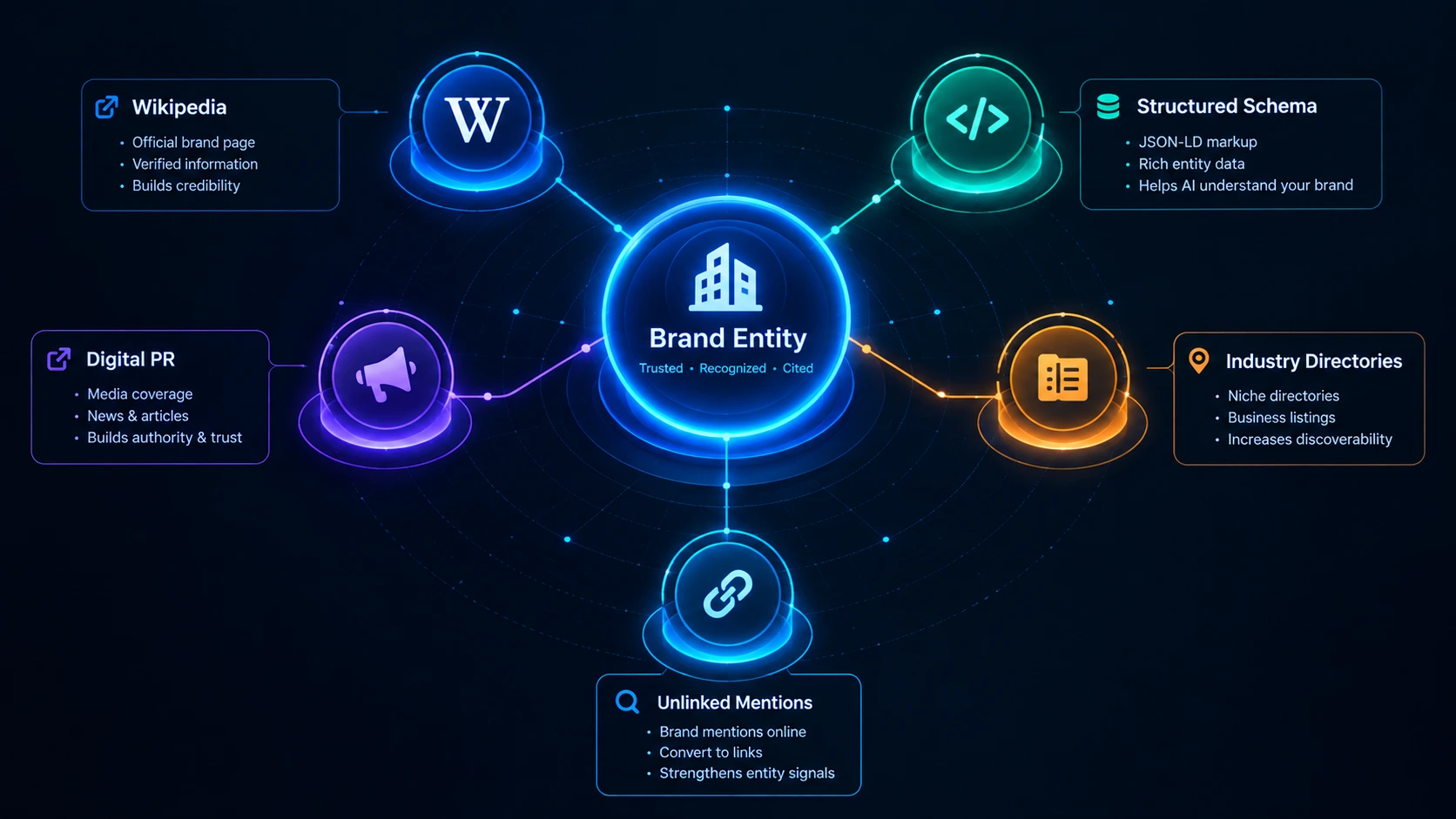
How AI Search Engines Build Brand Knowledge Graphs
To influence AI brand citations, you must first understand how Large Language Models (LLMs) and vector search engines recognize a brand as an Entity.
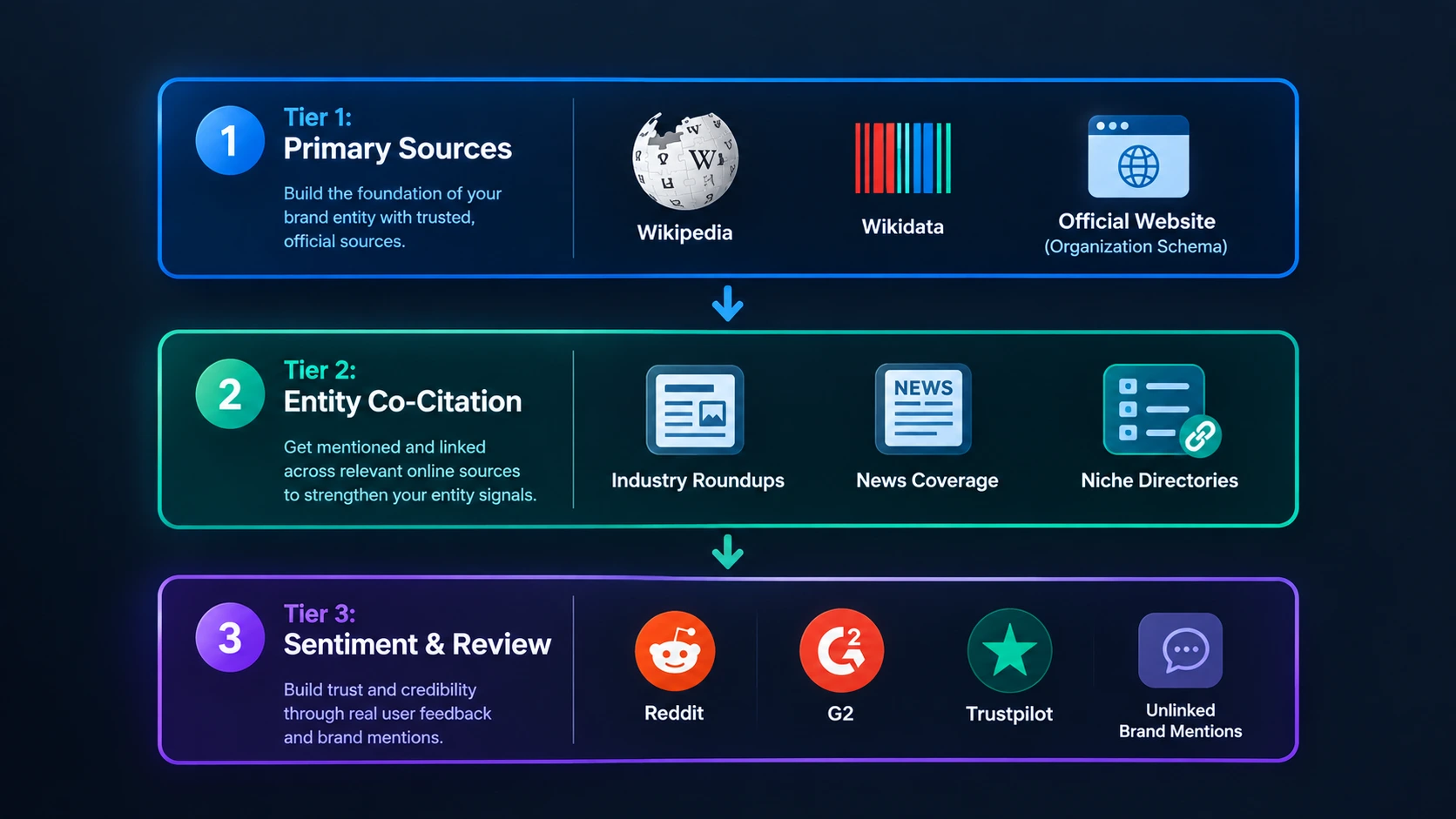
In natural language processing (NLP), an entity is a unique, well-defined concept or organization (e.g., LLMrush, OpenAI, Salesforce). AI engines build and verify brand entities using a 3-tier validation process:
-
Primary Entity Anchors: The AI verifies core facts (founding date, founders, official domain, headquarters, core products) using authoritative knowledge repositories like Wikidata and structured
Organizationschema. -
Entity-Attribute Association (Co-occurrence): The LLM analyzes how frequently your brand name appears alongside specific industry keywords (e.g., associating “LLMrush” with “AI Search Optimization” or “GEO Audit”).
-
Sentiment & Consensus Verification: The engine scans community discussions and third-party review platforms to confirm that human consensus matches your brand’s self-stated value proposition.
The 4-Step Brand Entity Optimization Framework
1. Establish an Authoritative Organization Schema
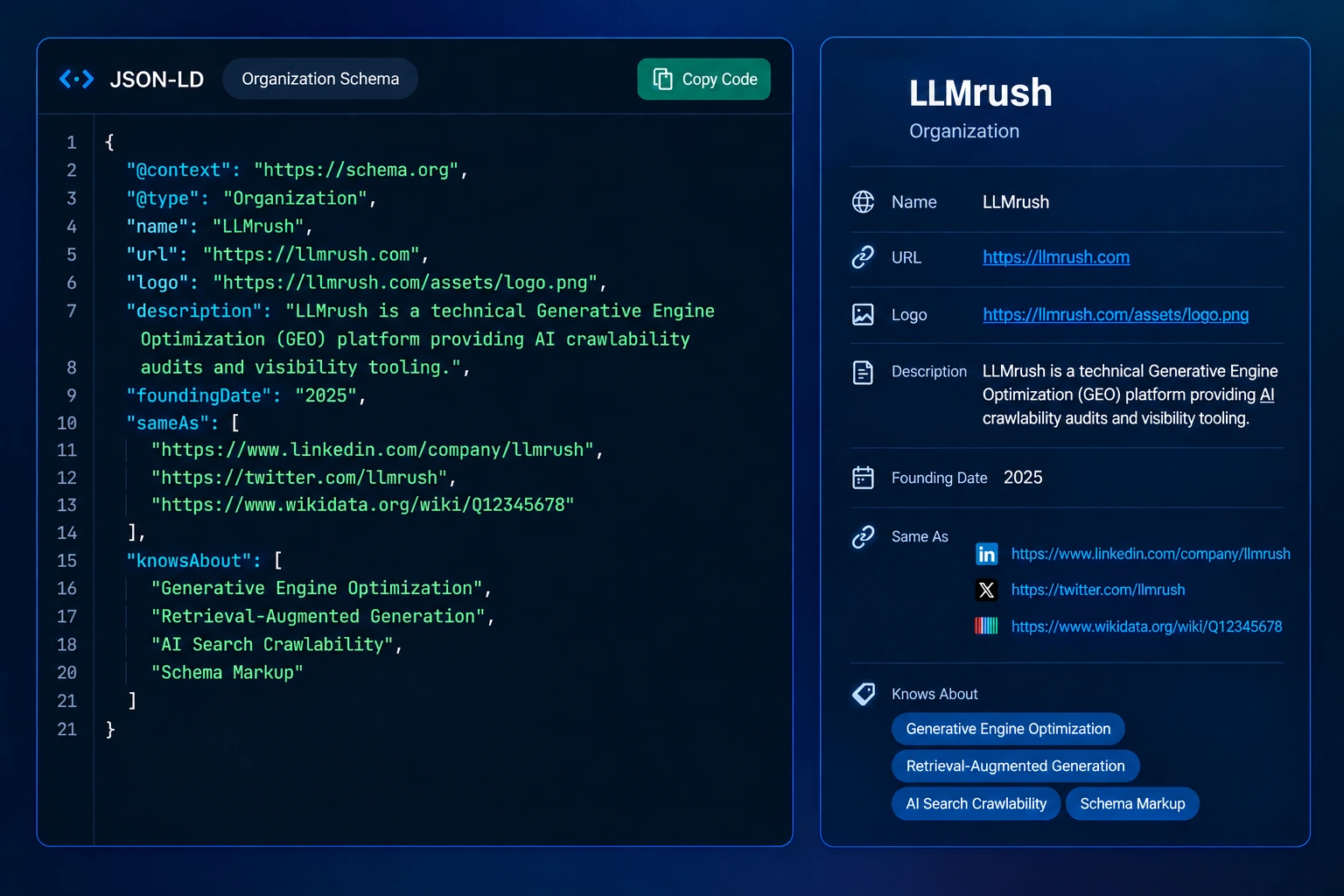
Your official domain is the primary source of truth for your brand entity. You must provide search crawlers with unambiguous machine-readable identity data using JSON-LD Organization schema on your homepage and About page.
In addition to standard organization markup, ensure your entity markup aligns with the technical parameters detailed in our guide on JSON-LD Schema Markup for AI Crawlability.
-
sameAs: Links your domain directly to your social profiles, official business registers, and Wikidata pages. -
knowsAbout: Explicitly defines the topic entities your organization specializes in.
2. Build and Claim Your Wikidata Entity
While Wikipedia pages can be difficult for smaller businesses to obtain, Wikidata is open to public contribution and serves as a foundational data source for Google’s Knowledge Graph, Perplexity, and ChatGPT.
-
Create an item on Wikidata for your organization.
-
Add key claims:
instance of->business/software company,official website,inception date, andlocated in the administrative territorial entity. -
Ensure the Wikidata item URL is added to your homepage’s
OrganizationschemasameAsarray.
3. Leverage Digital PR and Niche Co-Citations
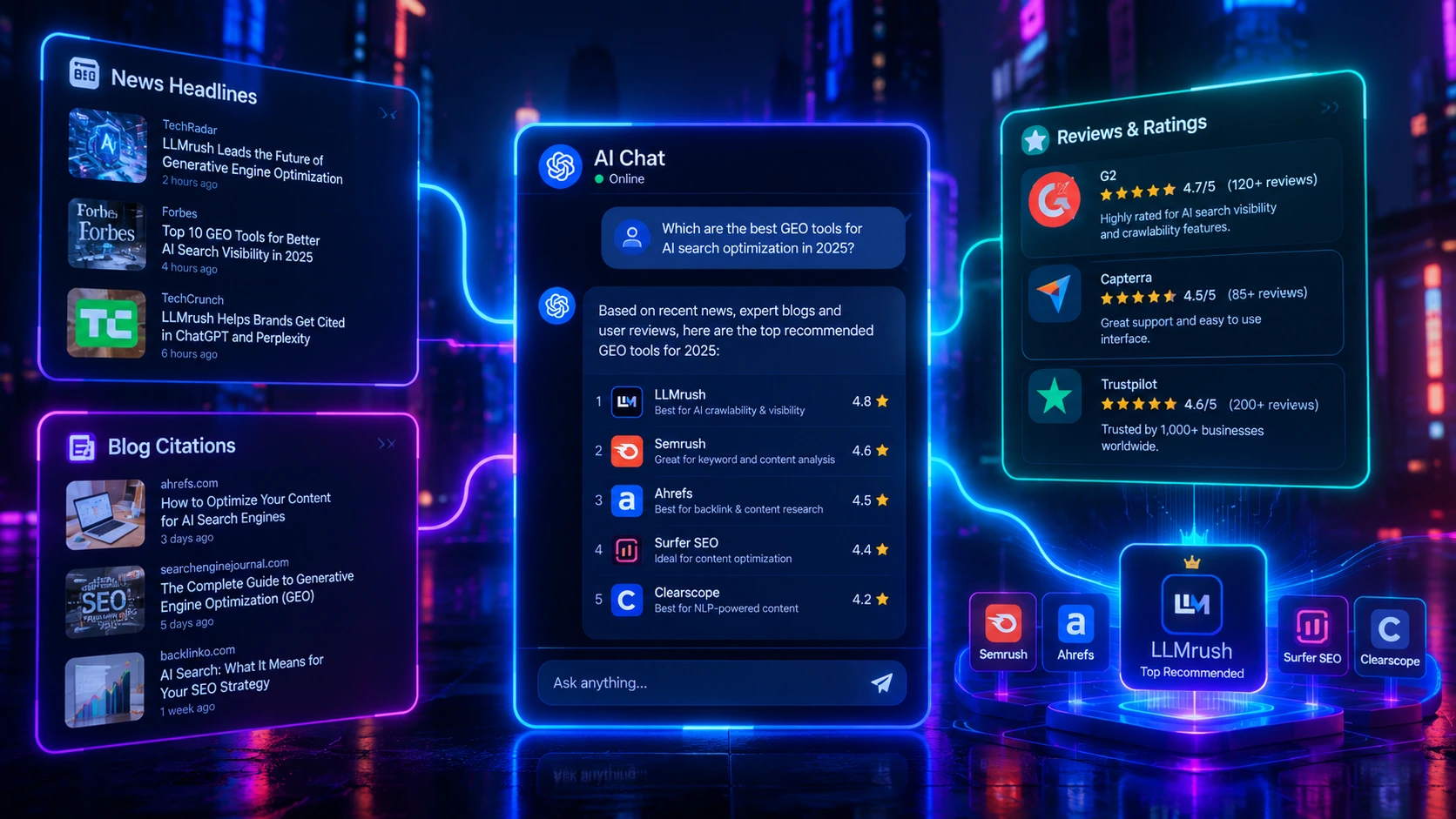
AI engines place significant weight on unlinked brand mentions and external citations across authoritative industry publications.
-
Target Niche “Best Of” Roundups: Reach out to industry blogs and software review sites that publish “Top 10 [Your Industry] Tools/Services” lists. Being present on these pages feeds the LLM’s co-occurrence mapping.
-
Publish Original Data & Research: Releasing proprietary surveys, industry benchmarks, or technical case studies encourages journalists and bloggers to cite your brand as a primary source.
4. Optimize Off-Page Entity Signals (Reddit, G2, & Directories)
Real-time RAG scrapers (such as PerplexityBot and OAI-SearchBot) frequently query community platforms like Reddit to gauge user consensus.
-
Maintain an active presence in relevant Reddit subreddits and tech forums where your target audience asks for product recommendations.
-
Ensure your profiles on review platforms like G2, Capterra, or Trustpilot are fully filled out with consistent NAP (Name, Address, Phone/URL) information.
-
Ensure your server’s edge firewall allows AI crawlers to fetch your documentation and entity pages without friction, as outlined in our guide on AI Crawlers vs. Search Bots: robots.txt & WAF Configuration. Additionally, keep your core documentation indexed in your site’s llms.txt file setup for structured bot parsing.
Brand Entity Optimization Audit Checklist
Before launching your brand optimization campaign, verify these 5 core entity signals:
-
Organization Schema: Validate your homepage JSON-LD using Schema.org’s Validator, ensuring
sameAsandknowsAboutfields are populated. -
Wikidata & Wikipedia Presence: Claim or update your Wikidata entry with accurate business metadata.
-
Co-Occurrence Alignment: Search AI engines for
"[Your Industry] + top tools"to see if your brand appears in synthesized listicles. -
Consistency Across Profiles: Ensure your brand name, description, and core product categories match identically across LinkedIn, Crunchbase, and G2.
-
Freshness Signaling: Regularly update your entity pages and schema timestamps to align with our Data Freshness & Real-Time RAG Framework.
Frequently Asked Questions (FAQs)
1. What is the difference between traditional brand SEO and Brand Entity Optimization?
Traditional brand SEO focuses on ranking your domain at the top of Google for your branded keywords. Brand Entity Optimization focuses on training AI Knowledge Graphs and LLMs so that conversational engines recommend your brand when users search for non-branded, industry-wide queries.
2. Do unlinked brand mentions help with AI search visibility?
Yes. Unlike traditional search engines that rely heavily on hyperlinked backlinks, LLMs process full text semantically. Unlinked mentions of your brand name alongside relevant industry keywords directly strengthen your entity’s co-occurrence score in vector databases.
3. How long does it take for AI search engines to recognize a new brand entity?
Once your Organization schema, Wikidata profile, and third-party citations are active, conversational search engines utilizing real-time RAG can begin recognizing and citing your brand entity within a few weeks to a couple of months.
4. Can a small business or startup establish an AI Knowledge Graph entity?
Absolutely. While securing a full Wikipedia page can be challenging, any business can implement Organization schema, register a Wikidata item, claim industry directory listings, and build brand citations across niche publications.
Final Thoughts: Building a Resilient Brand in the Age of AI Search
As AI search engines replace traditional result pages with direct conversational recommendations, brand entity strength has become the single most critical factor for long-term organic growth. AI models don’t just evaluate what you say about yourself—they evaluate what the entire web says about your organization.
By structuring your on-page Organization schema, building authoritative Wikidata entries, securing consistent unlinked citations, and maintaining clear entity signals across the web, you ensure that conversational engines cite your business as a trusted industry authority.
Want to Audit Your Brand’s AI Visibility Status?
Unsure how ChatGPT, Perplexity, or Gemini perceive your brand entity? Use our Free AI Crawlability Checker to verify your site’s structured schema and crawler accessibility, or book an Expert AI Visibility Audit with our team at LLMrush to build a custom brand entity optimization roadmap today!

Zulfiqar Ali
Zulfiqar Ali is an SEO Expert with over 8+ years of experience in AI SEO, Technical SEO, and Local SEO. At LLMrush, he focuses on AI search visibility, GEO, and technical website optimization, delivering practical strategies, technical analysis, and evidence-based guidance.
Follow on LinkedInCheck Other Interesting Posts


Join the Conversation
Share your thoughts, questions, or feedback about this article.