ChatGPT Ads: What They Mean for the Future of AI Marketing
Artificial intelligence is changing how people discover information, compare products, research services, and make purchasing decisions. Now, advertising is becoming part of that transformation.
OpenAI has introduced advertising inside ChatGPT, creating a new opportunity for businesses to reach people while they explore ideas, evaluate options, and make decisions through AI-powered conversations.
This development could reshape digital advertising. Unlike traditional search advertising, where businesses compete for visibility around specific keywords, conversational advertising introduces a new environment where relevance and user intent develop throughout a conversation.
For marketers, business owners, and SEO professionals, this raises important questions: How do ChatGPT Ads work? Can businesses advertise on ChatGPT? Will AI advertising change SEO? And what does this mean for brands that want to become more visible in AI-generated answers?
Let’s explore what ChatGPT Ads mean for the future of digital marketing.
What Are ChatGPT Ads?
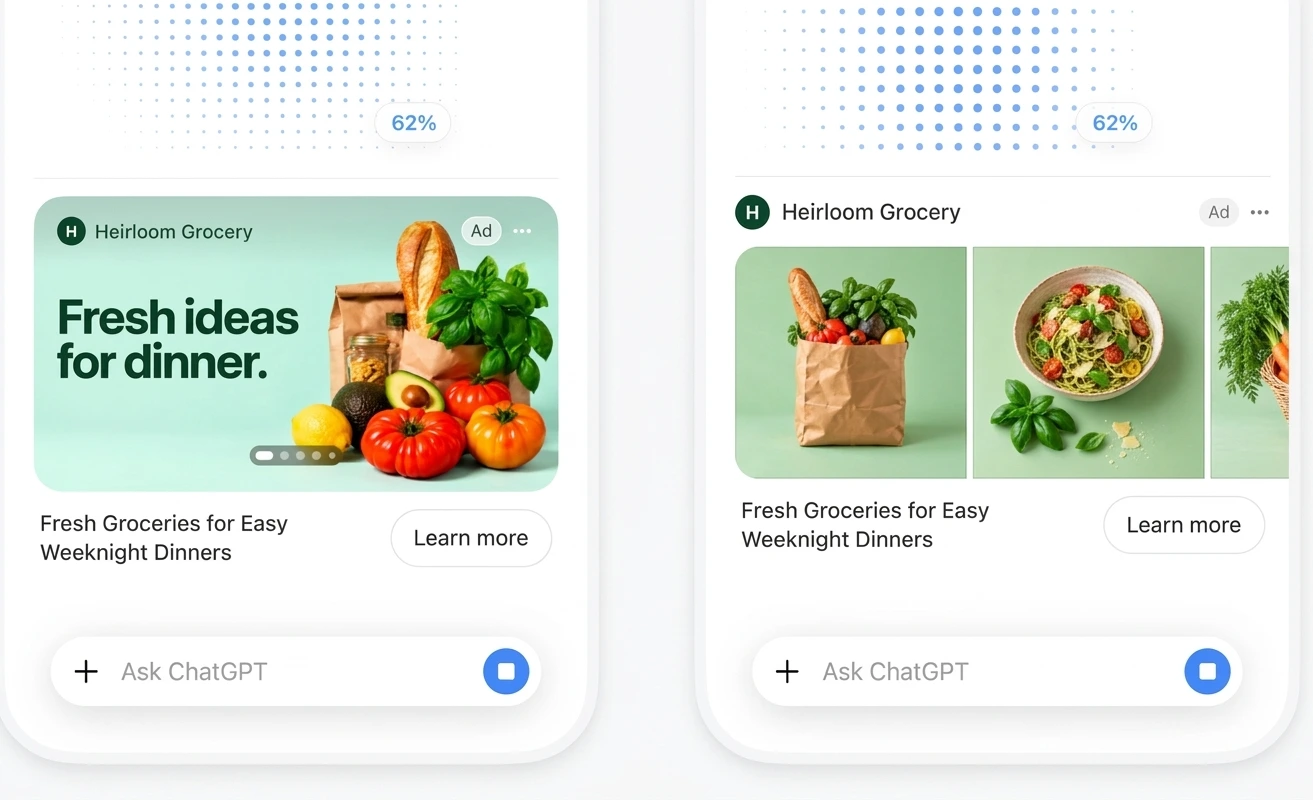
ChatGPT Ads are sponsored advertising placements displayed within the ChatGPT experience. They give businesses an opportunity to introduce their products and services to users while they explore topics, compare alternatives, and look for solutions.
Unlike conventional search advertisements, which primarily rely on keyword searches, ChatGPT advertising can consider the context and intent of a user’s conversation.
For example, someone asking ChatGPT about planning a home renovation might encounter a relevant advertisement for home improvement products or local services.
The idea is to connect advertising with what people are actively trying to accomplish.
OpenAI has emphasized that advertisements are clearly identified and displayed separately from ChatGPT’s answers. Advertisers cannot pay to influence the responses generated by ChatGPT.
This distinction is important because users should be able to recognize sponsored content without confusing it with independent AI-generated recommendations.
Why Is OpenAI Introducing Advertising?
Running large-scale AI services requires significant computing resources, infrastructure, research, and ongoing development.
Subscriptions and enterprise services are important parts of OpenAI’s business model, but advertising introduces another potential revenue stream.
According to OpenAI, advertising can help support broader access to ChatGPT through its free and lower-cost plans.
There are several reasons why this approach makes sense.
Supporting Free Access to AI
AI services require substantial infrastructure investment. Advertising provides another way to support the cost of operating these services while maintaining access for users who do not subscribe to premium plans.
Creating New Opportunities for Businesses
Businesses are constantly looking for new ways to reach potential customers. ChatGPT introduces an advertising environment where users may already be researching products, exploring solutions, or comparing different services.
Connecting Advertising With User Intent
Traditional advertising often relies on keywords, browsing activity, and audience targeting.
Conversational AI introduces additional context. A user can explain what they need, describe their preferences, and refine their requirements through multiple interactions.
This creates opportunities for more contextually relevant advertising.
How Do Ads Appear Inside ChatGPT?
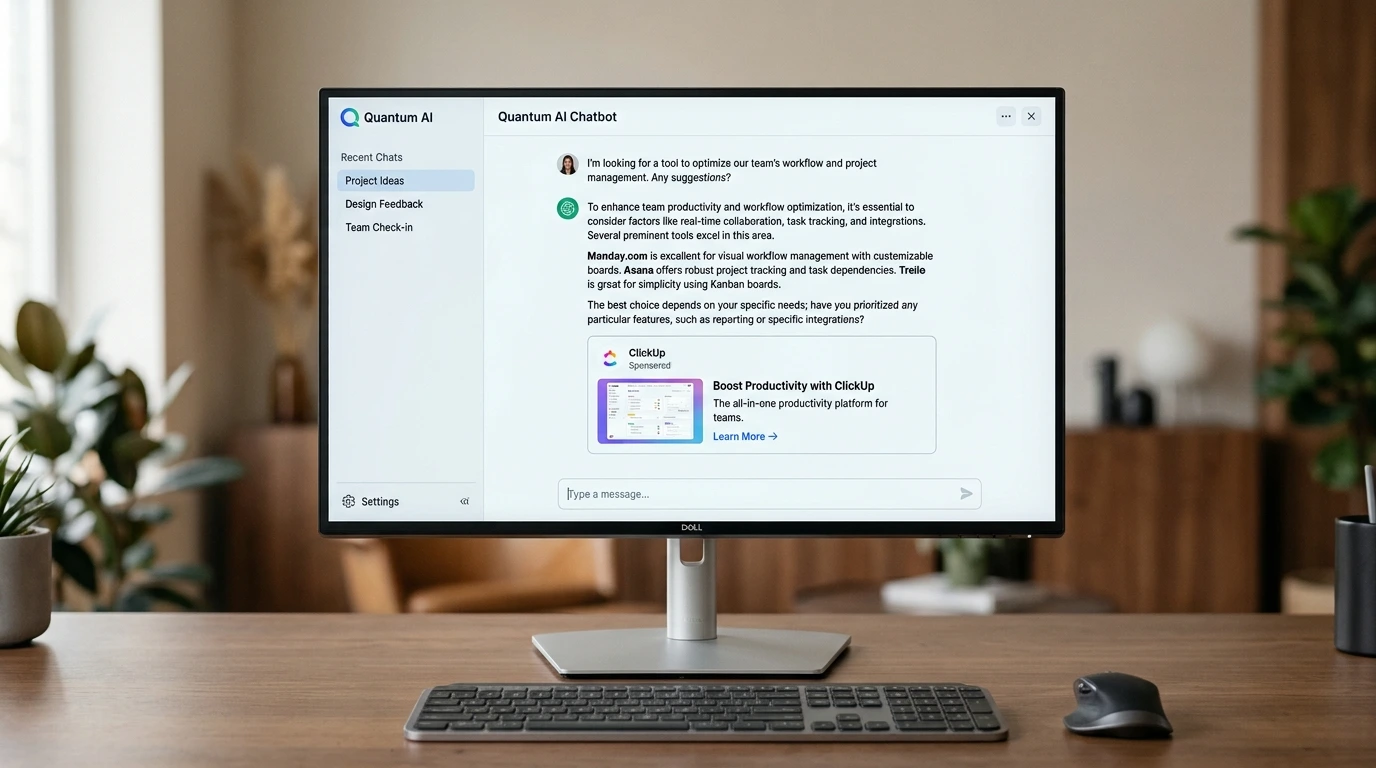
ChatGPT advertising is designed to appear separately from the AI-generated response.
OpenAI’s advertising documentation describes sponsored placements that can include:
- Advertiser name and branding.
- Advertisement headline.
- Description or promotional copy.
- Creative image.
- Link to the advertiser’s landing page.
- Clear advertising identification.
Ads may appear below ChatGPT responses. OpenAI has also introduced visual advertising formats designed to help users explore products and services.
The advertising system considers multiple signals when selecting advertisements, including the context of the current conversation, the advertiser’s landing page, ad content, and advertiser-provided context hints.
However, advertising placement does not mean an advertiser controls the AI’s response.
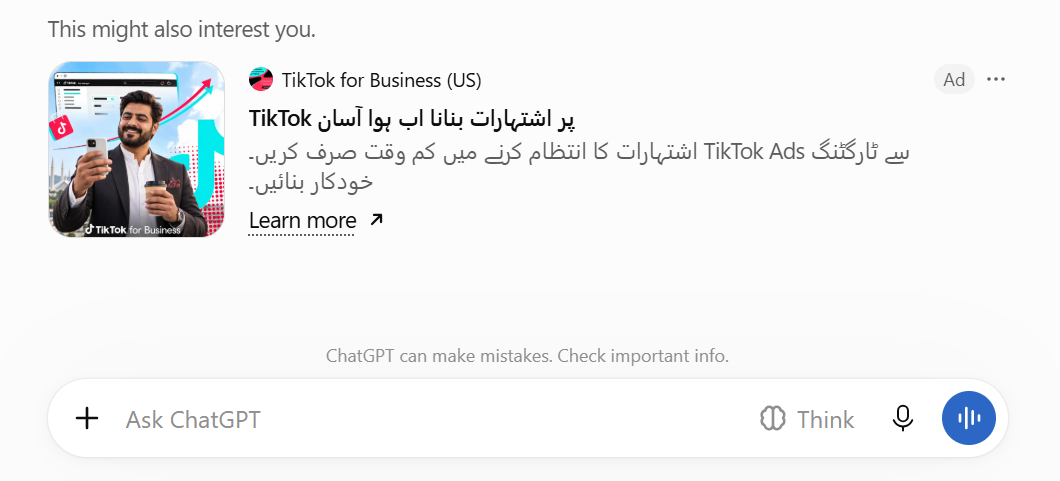
An important distinction: Not every sponsored item visible around the ChatGPT interface necessarily belongs to OpenAI’s ChatGPT Ads program. Third-party platform-sponsored placements and official ChatGPT advertising are different things. Businesses and publishers should verify the source of an advertisement before reporting it as an OpenAI advertising campaign.
For example, a screenshot showing a TikTok for Business sponsored placement is evidence of a sponsored item appearing in the interface, but the placement alone does not establish that TikTok purchased an official ChatGPT Ads campaign.
How Does ChatGPT Advertising Work for Businesses?
ChatGPT advertising introduces a different approach to reaching potential customers.
Instead of relying exclusively on traditional keyword-based targeting, advertisers can reach people through conversational contexts.
Consider a person who wants to purchase a new laptop.
Their conversation might develop through several stages:
- Exploring laptop options for professional work.
- Comparing different specifications and brands.
- Setting a budget.
- Evaluating available products.
- Deciding where to purchase.
An advertisement relevant to the user’s requirements could introduce a suitable product or service during this process.
OpenAI’s advertising system uses conversational context and other advertising signals to determine which eligible advertisements may be relevant.
Advertisers can manage campaigns through OpenAI’s Ads Manager, subject to account and regional availability.
OpenAI supports impression-based and click-based advertising options, along with campaign measurement capabilities.
For businesses, this creates another potential channel to reach audiences during product discovery and consideration.
Who Can Advertise on ChatGPT?
OpenAI has expanded ChatGPT advertising availability to multiple international markets.
In its October 21, 2026 announcement, OpenAI stated that advertising had expanded to 89 countries, including Pakistan. Advertisers can access the platform through supported partners or self-service options, depending on their market and eligibility.
Businesses interested in advertising can explore the official platform:
Availability, account eligibility, advertising policies, and campaign options may change over time.
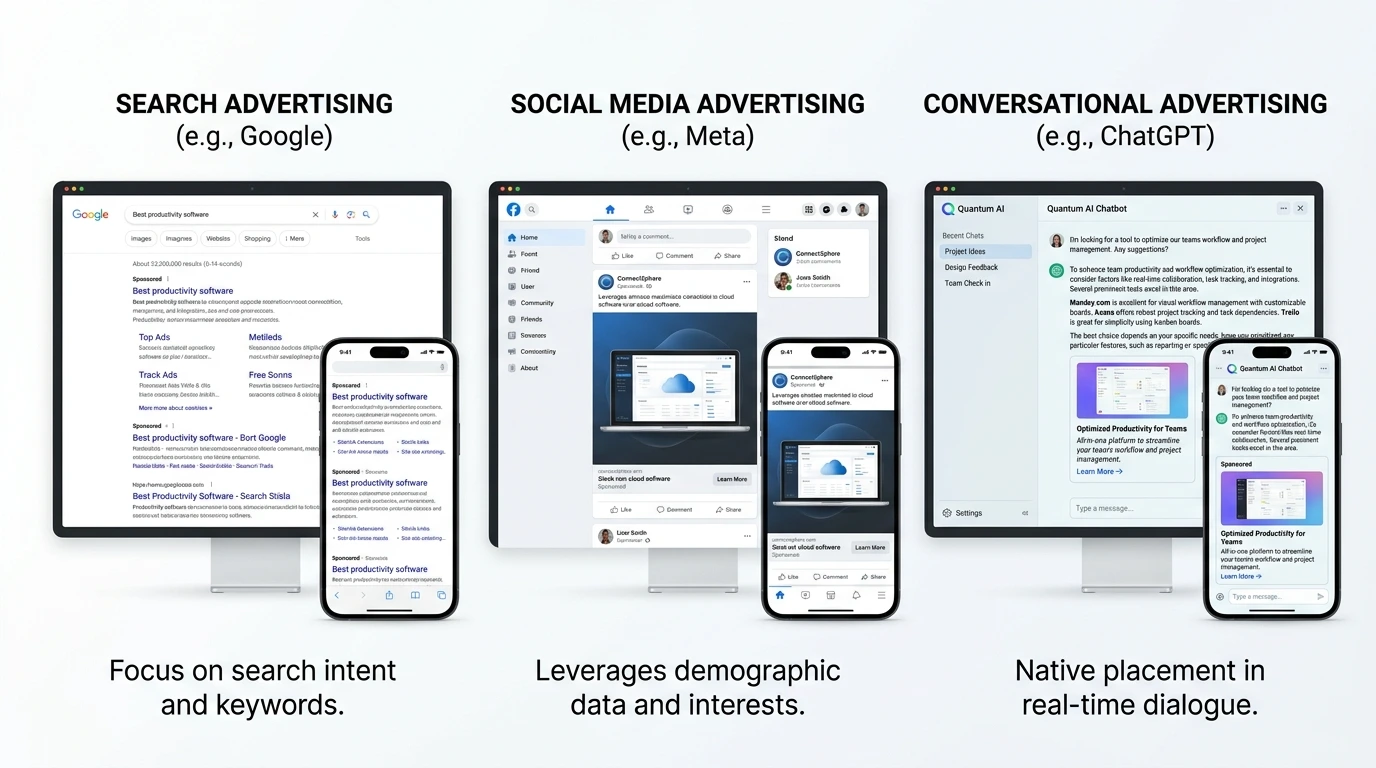
ChatGPT Ads vs. Google Ads vs. Meta Ads
The introduction of ChatGPT advertising creates another option for businesses planning their digital marketing strategies.
However, these platforms serve different purposes. Understanding their differences can help marketers decide where each channel fits.
| Feature | ChatGPT Ads | Google Ads | Meta Ads |
|---|---|---|---|
| Primary environment | AI conversations | Search and websites | Social platforms |
| User behavior | Exploring and comparing | Searching for information | Browsing and discovering |
| Advertising signals | Conversational context | Keywords and audience signals | Interests and audience signals |
| Main opportunity | Contextual discovery | Search intent | Audience discovery |
| Common formats | Sponsored conversational placements | Search, display, video | Image, video, carousel |
ChatGPT Ads
ChatGPT advertising offers opportunities to reach people during conversations where they are exploring ideas or evaluating potential solutions.
Its distinctive feature is the conversational environment.
Google Ads
Google Ads connects businesses with users actively searching for products, services, and information.
Search campaigns can be particularly effective when people already know what they want.
Meta Ads
Meta advertising helps businesses reach audiences through social media platforms using creative content, audience targeting, and engagement signals.
It can be useful for brand awareness, product discovery, and generating demand.
Which Platform Is Better?
There is no universal winner.
A business selling a specific product might benefit from Google Search Ads, while a lifestyle brand may find Meta advertising useful for visual discovery.
ChatGPT Ads introduces another opportunity: reaching people while they are actively discussing needs, exploring alternatives, and considering solutions.
A well-planned marketing strategy may eventually combine all three channels.
How AI Advertising Could Change Digital Marketing
AI advertising could introduce significant changes to how businesses approach customer acquisition.
Traditional advertising often focuses on reaching audiences through keywords, demographics, interests, and browsing behavior.
Conversational AI introduces another dimension: understanding what someone is trying to accomplish through natural language.
This could influence several areas of digital marketing.
1. More Contextual Advertising
A search for running shoes provides some information about a user’s interests.
However, a conversation explaining that someone needs lightweight running shoes for their first marathon provides much richer context.
AI-powered advertising systems can use conversational context to identify potentially relevant products and services.
2. New Brand Discovery Opportunities
Users do not always know which brands offer the products or services they need.
AI platforms can introduce businesses during research and comparison activities.
This creates another opportunity for brands to become familiar to potential customers.
3. Changes in Customer Journeys
Traditional customer journeys often involve separate activities across search engines, social media platforms, websites, and online marketplaces.
AI assistants can bring several research and comparison activities into one conversational experience.
This may change how users move from discovering a product to evaluating and purchasing it.
4. Greater Importance of Relevance
As advertising becomes more contextual, irrelevant promotions may become less useful.
Businesses will need clear product information, relevant landing pages, compelling offers, and advertising messages that match what potential customers actually need.
What Do ChatGPT Ads Mean for SEO and AI Visibility?
This is particularly important for businesses investing in organic search and AI search optimization.
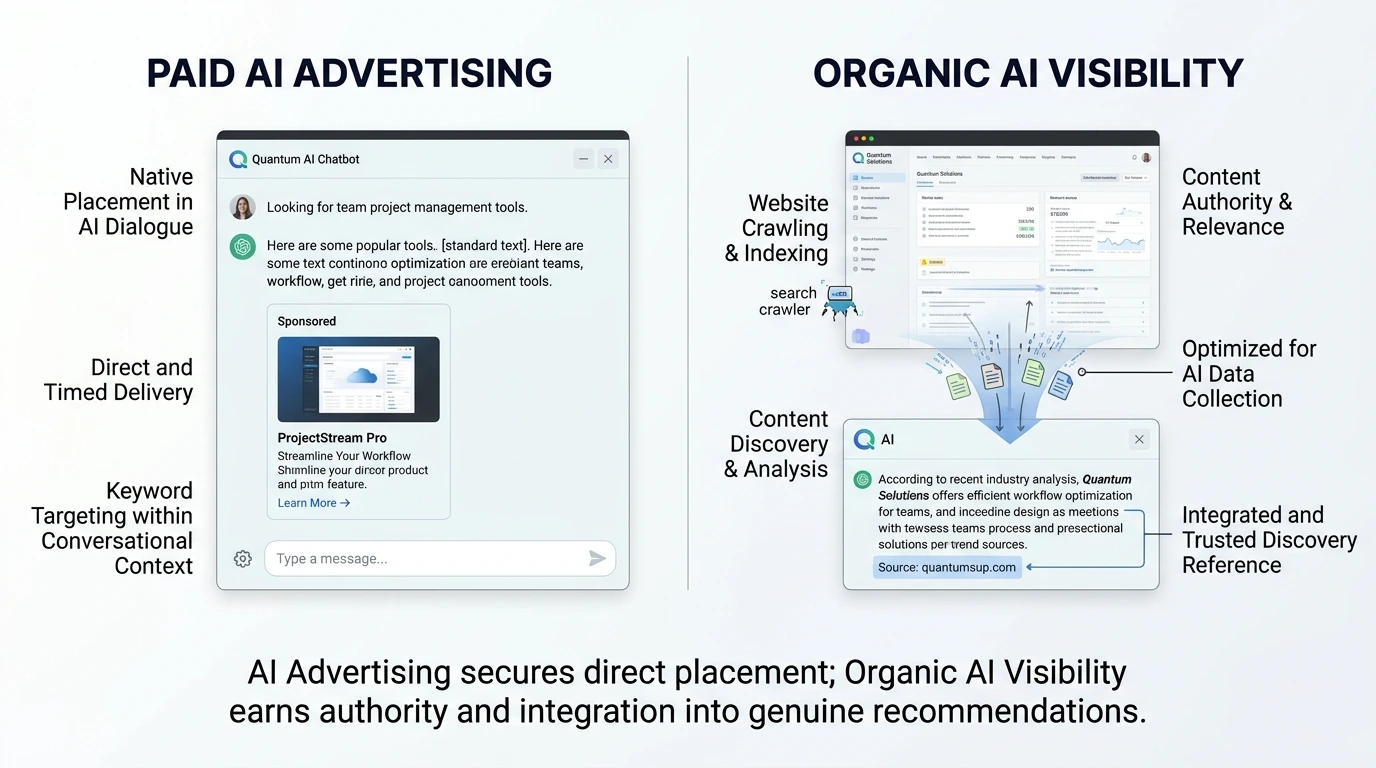
ChatGPT advertising and organic AI visibility are two different concepts.
Advertising gives eligible businesses an opportunity to pay for sponsored placements.
Organic AI visibility relates to whether AI systems can discover, understand, retrieve, and reference a brand’s information when generating responses.
These activities may coexist, but they should not be confused.
Paying for an advertisement does not automatically make a website more likely to appear in organic ChatGPT answers.
Similarly, having strong SEO rankings does not guarantee that a business will receive sponsored advertising placements.
Why Organic AI Visibility Still Matters
People use AI platforms to research products, compare services, discover brands, and find answers.
When an AI system generates a response, a brand’s visibility can depend on several factors, including:
- Website accessibility and crawlability.
- Clear and useful website content.
- Relevant information about products and services.
- Credible external references.
- Content structure and contextual clarity.
- Search and retrieval signals available to AI systems.
Businesses should therefore continue investing in organic visibility rather than depending entirely on paid advertising.
Check Your AI Visibility
Understanding how AI platforms recognize your brand is becoming increasingly important.
The https://llmrush.org/ai-visibility-checker/ helps businesses evaluate their visibility across AI platforms.
It provides another way to understand how a brand performs in the evolving AI search ecosystem.
Check Whether AI Crawlers Can Access Your Website
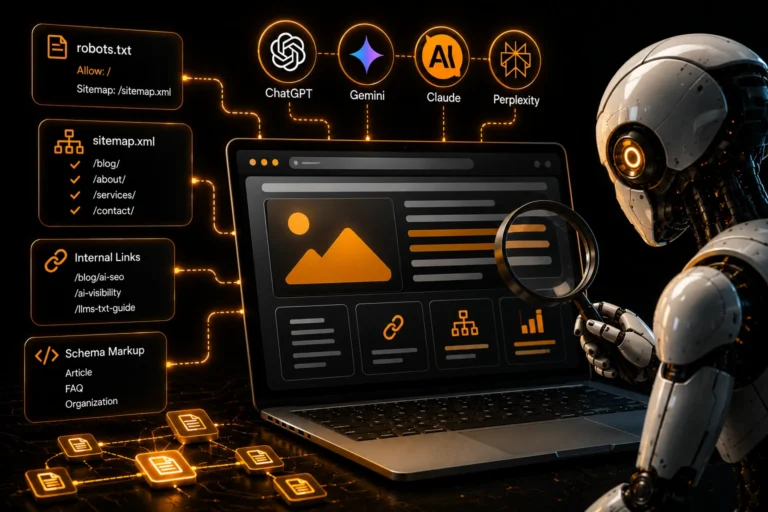
Before focusing on AI visibility, businesses should also consider whether AI crawlers can access their website.
Technical accessibility, robots.txt directives, and crawl-related configuration can affect how automated systems interact with website content.
The https://llmrush.org/ai-crawlability-checker/ helps website owners examine important AI crawler accessibility signals.
Both organic AI visibility and paid AI advertising deserve attention, but they serve different marketing objectives.
Privacy, Transparency, and User Trust
Advertising inside AI platforms introduces important questions about privacy and user trust.
People often share detailed information with AI assistants when asking questions, researching products, or working through personal and professional tasks.
For advertising to succeed in this environment, users need confidence that their conversations are handled responsibly.
OpenAI has published advertising principles addressing several important areas.
Ads Do Not Influence ChatGPT Answers
OpenAI states that advertisements do not influence the answers generated by ChatGPT.
The advertising system operates separately from the system generating conversational responses.
Advertisers cannot pay to change or rank ChatGPT’s answers.
Conversations Are Not Shared With Advertisers
OpenAI states that it does not share users’ private conversations with advertisers or sell customer data to advertisers.
This is an important distinction between contextual advertising and giving advertisers direct access to private conversations.
Clear Advertising Labels
Sponsored content should be clearly identified so users can distinguish paid placements from organic responses.
Transparency helps preserve the trust people place in AI platforms.
User Controls
OpenAI provides controls related to advertising personalization and the user experience.
Users should review the official advertising help documentation for the latest information about available controls and eligibility.
For more information, visit:
https://help.openai.com/en/articles/20001047-ads-in-chatgpt
The Future of AI-Powered Advertising
ChatGPT advertising represents an important development in the evolution of digital marketing.
As AI assistants become more integrated into everyday activities, businesses may have new opportunities to reach potential customers through conversational experiences.
However, advertising is only one part of the broader AI marketing ecosystem.
Several developments could influence this space over the coming years.
Conversational Commerce
AI assistants may increasingly help users move from researching products to comparing options and taking purchasing actions.
This could create new opportunities for businesses to participate in digital customer journeys.
More Advanced Advertising Formats
Advertising experiences may become more visual and interactive.
OpenAI has already introduced new visual advertising formats, indicating that AI advertising is not limited to traditional text-based sponsored placements.
Better Campaign Measurement
Businesses will want to understand how AI advertising contributes to impressions, clicks, conversions, and customer acquisition.
More advanced measurement tools could help advertisers evaluate performance and optimize their campaigns.
The Growing Importance of Organic AI Visibility
As more people use AI platforms to discover information and brands, businesses will need to understand how their websites and content appear across AI-powered search experiences.
Paid advertising may provide immediate exposure, but organic visibility remains important for long-term brand discovery and credibility.
Frequently Asked Questions About ChatGPT Ads
1. Does ChatGPT Show Advertisements?
Yes. OpenAI introduced advertising in ChatGPT in 2026. Ads may appear for eligible users on supported plans and in supported regions. Availability and experience can vary.
2. Are ChatGPT Ads Available in Pakistan?
Yes. OpenAI’s October 21, 2026 announcement included Pakistan among the 89 countries where ChatGPT advertising had expanded. Advertiser access and campaign eligibility may depend on the available account and access route.
3. Can Businesses Advertise on ChatGPT?
Yes. Eligible businesses can explore ChatGPT advertising through OpenAI’s official advertising platform and supported partners.
Visit https://ads.openai.com/ for current information.
4. Do ChatGPT Ads Affect AI-Generated Answers?
No. OpenAI states that advertising does not influence the answers generated by ChatGPT. Advertisers cannot pay to change or rank those answers.
5. Are ChatGPT Ads the Same as Google Ads?
No. Google Ads primarily connects businesses with people through search, display, and other advertising placements. ChatGPT Ads introduces sponsored placements within a conversational AI environment.
6. Do ChatGPT Ads Affect SEO?
Not directly. Paid advertising and organic search visibility are different marketing activities. Running ChatGPT Ads does not automatically improve a website’s organic rankings or AI-generated recommendations.
7. Can Businesses Improve Their Organic Visibility in AI Platforms?
Businesses can work on website accessibility, content quality, technical SEO, clear information architecture, and authoritative brand references.
Monitoring AI visibility and crawlability can also help identify areas that need improvement.
8. Will AI Advertising Replace Traditional Digital Advertising?
There is no reason to assume that AI advertising will completely replace traditional channels. Search advertising, social media advertising, and conversational advertising serve different purposes and may work together.
Final Thoughts
ChatGPT Ads represent another step in the evolution of digital advertising.
As people increasingly use AI assistants to research products, compare services, and explore solutions, businesses have new opportunities to reach potential customers.
However, paid advertising should not become the only focus of an AI marketing strategy.
Brands also need accessible websites, useful content, strong technical foundations, and consistent organic visibility across AI-powered platforms.
The future of digital marketing will likely involve a combination of paid advertising, traditional SEO, and AI visibility optimization.
Businesses that understand the differences between these approaches will be better positioned to adapt as the AI ecosystem evolves.
Explore your brand’s AI visibility with LLMrush AI Visibility Checker and evaluate website accessibility with the AI Crawlability Checker.

Zulfiqar Ali
Zulfiqar Ali is an SEO Expert with over 8+ years of experience in AI SEO, Technical SEO, and Local SEO. At LLMrush, he focuses on AI search visibility, GEO, and technical website optimization.
Follow on LinkedInCheck Other Interesting Posts



Join the Conversation
Share your thoughts, questions, or feedback about this article.