How to Use JSON-LD Schema to Get Cited in ChatGPT and Perplexity Search
As Generative Engine Optimization (GEO) replaces traditional SEO tactics, securing brand visibility is no longer just about ranking on page one of Google. Today, AI engines like ChatGPT, Perplexity, Claude, and Gemini synthesize web data to deliver direct answers to user queries.
To guarantee that AI models accurately parse, summarize, and cite your website’s content, implementing structured data is non-negotiable. While traditional search engines used schema primarily for rich snippets (like star ratings and site links), AI search models rely on JSON-LD (JavaScript Object Notation for Linked Data) as a direct knowledge graph interface.
In this guide, we will explore why JSON-LD schema is vital for AI search visibility, the core schema types you must deploy, and step-by-step code implementation to maximize your brand citations.

Why JSON-LD Schema Matters for Generative Engine Optimization (GEO)
Large Language Models (LLMs) process billions of unformatted HTML pages daily. When a crawler fetches raw HTML text, it must infer context, entity relationships, and core facts.
JSON-LD eliminates ambiguity by providing machine-readable entity definitions directly in the header of your web pages. According to official developer documentation on W3C JSON-LD Specifications, this format allows structured data to be injected seamlessly without interfering with page layout or render performance.
When an AI engine processes a page with valid JSON-LD schema:
-
Entity Disambiguation: It instantly identifies your organization, author identity, product details, and core offerings.
-
Citation Confidence: Higher confidence in source factual accuracy dramatically increases the probability of your domain being cited in generative responses.
-
Structured Fact Retrieval: Attributes like publication dates, author credentials, and FAQs are ingested cleanly into the model’s retrieval-augmented generation (RAG) pipeline.
3 Essential Schema Types for Maximum AI Search Visibility
While there are hundreds of schema vocabularies, three specific JSON-LD schemas yield the highest impact for AI engine retrieval.
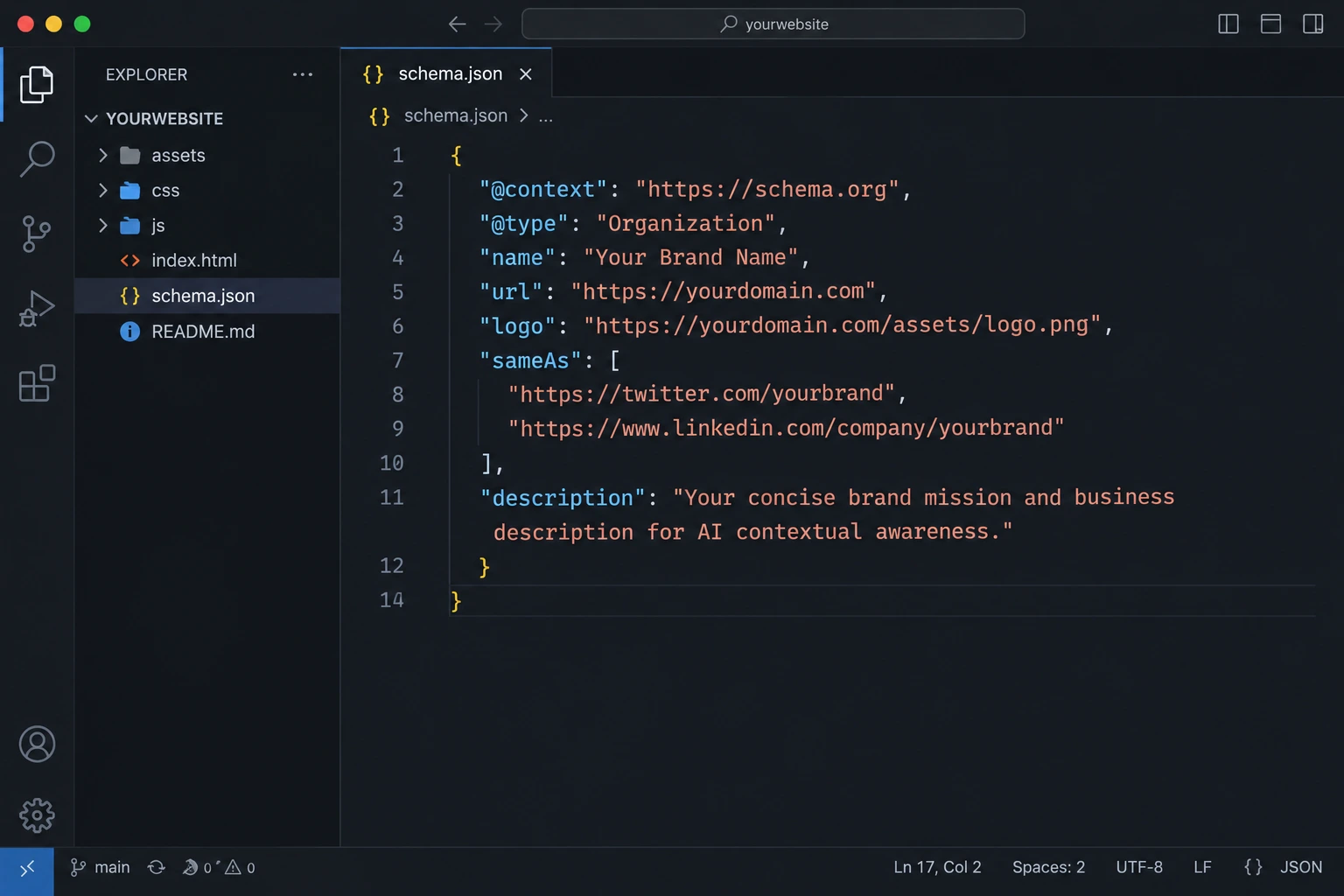
1. Organization Schema (Establishing Brand Entity)
Organization schema informs AI engines about who you are, your official domain, social profiles, and core branding facts. This helps build a persistent Knowledge Graph footprint across LLM training sets.
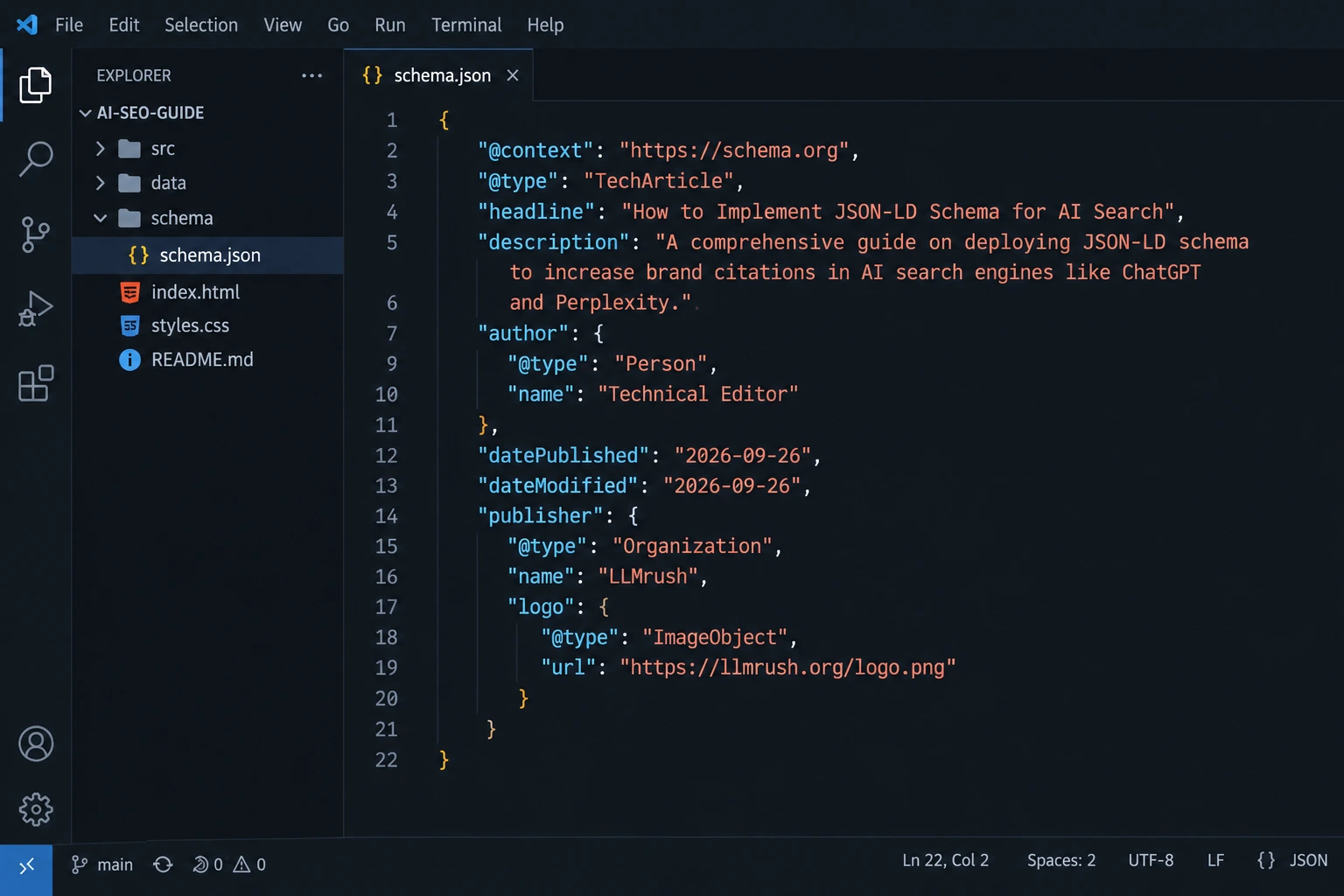
2. TechArticle / Article Schema (For Content Attribution & Direct Citation)
When publishing guides, tutorials, or industry insights, TechArticle or Article schema tells AI crawlers exactly who wrote the content, when it was updated, and what technical topic it addresses.
3. FAQPage Schema (For Direct Q&A Ingestion)
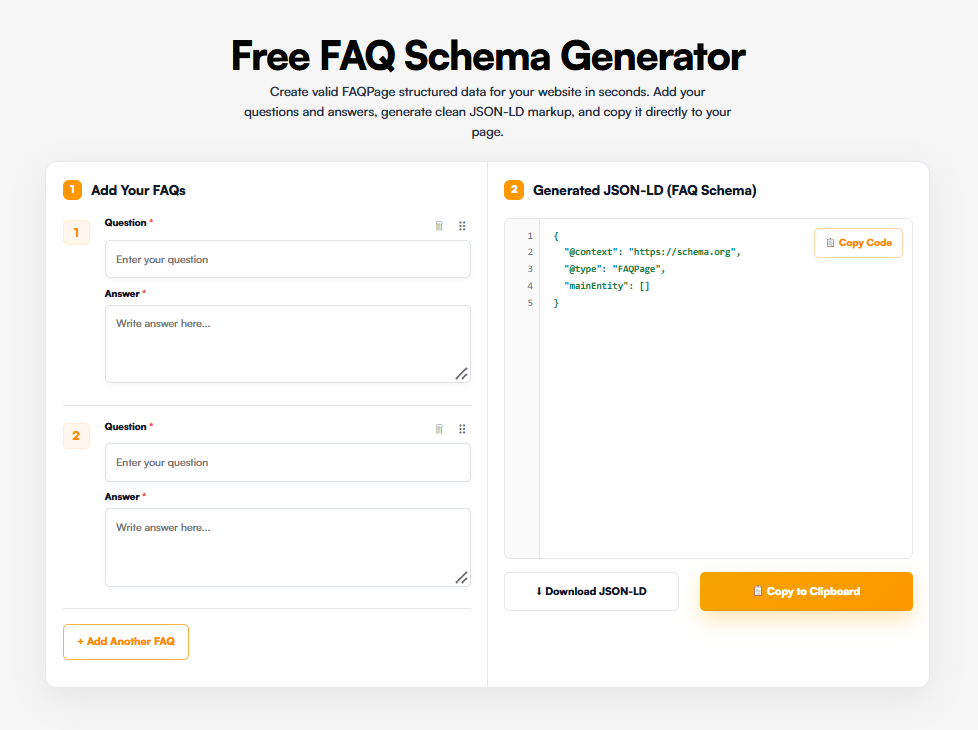
FAQPage schema is one of the most powerful structures for generative search. LLMs frequently format answers as direct Q&A pairs. Pre-formatting your content into structured question-and-answer nodes makes it effortless for engines like Perplexity to pull direct citations.
💡 Featured Free Tool:
Avoid manual coding errors! Generate error-free, valid schema markup in seconds using our Free FAQ Schema Generator.
Step-by-Step Guide to Deploying JSON-LD Schema
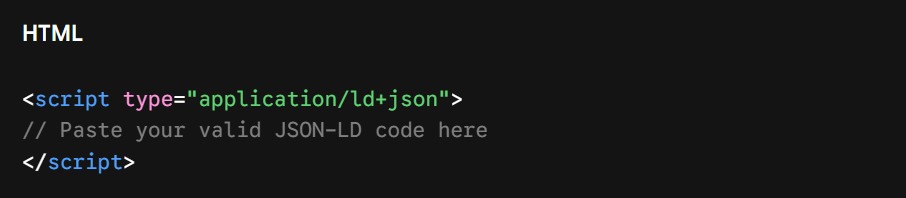
Implementing schema markup requires adding the script block into your site’s <head> section or using automated CMS integrations.
1. Generate the Script: Build your code manually or use specialized generators like our Free FAQ Schema Generator.
2. Inject into Web Page: Insert the code block into the <head> tag of your page:
3. Validate Syntax: Test your code with schema syntax validators to ensure there are no missing brackets, invalid quotes, or trailing commas.
How to Test and Analyze Your Site’s GEO Score
Once your schema and structured data are deployed, you need to measure how effectively generative engines read and interpret your site content.
💡 Analyze Your AI Visibility:
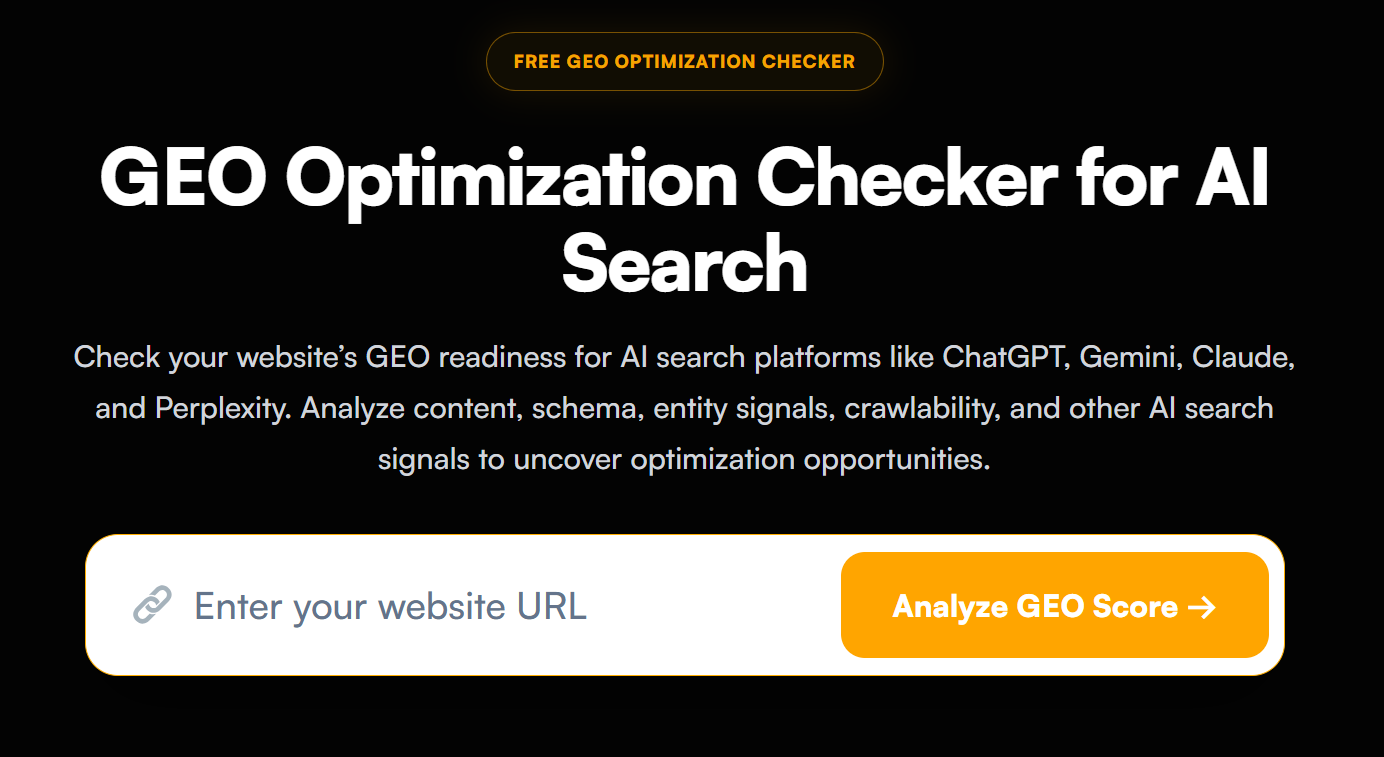
Measure how well your content is formatted for generative discovery using our Free GEO Optimization Tool. It provides actionable suggestions to improve your entity clarity and direct citation chances.
3 Common Schema Errors That Confuse AI Search Engines
-
Syntax Errors in JSON: A single missing comma or unclosed string bracket will render the entire
<script>tag unparseable for automated crawlers. -
Mismatch Between Schema and Visual Content: Schema must accurately reflect the visible text on the page. Injecting facts or claims into schema that do not exist in the rendered HTML can lead to algorithmic trust penalties.
-
Duplicate or Conflicting Schema Nodes: Having multiple conflicting
Organizationdefinitions across different plugins can confuse LLMs trying to construct a single source of truth for your brand.
Frequently Asked Questions (FAQs)
Does Google penalize sites using JSON-LD schema for AI engines?
No. Google officially supports JSON-LD as the preferred format for structured data, and it aligns fully with web standards.
How quickly do ChatGPT or Perplexity detect new schema markup?
AI engines that use real-time web retrieval (like Perplexity or ChatGPT with Browsing) can detect updated schema as soon as their crawlers re-index the modified page, typically within 24 to 72 hours.
Can I place multiple JSON-LD script tags on a single page?
Yes, you can include multiple <script type="application/ld+json"> tags on a single page (e.g., combining Organization schema with TechArticle schema).
Need an Automated Solution for Your Entire Website?
Debugging WAF rules, user-agent permissions, and HTTP header responses across hundreds of pages can quickly become complex.
Managing schema, crawlability, and llms.txt setups across large websites requires continuous monitoring. Test your domain today using our Free AI Crawlability Checker, or book a custom diagnostic with our Expert AI Visibility Audit.

Zulfiqar Ali
Zulfiqar Ali is an SEO Expert with over 8+ years of experience in AI SEO, Technical SEO, and Local SEO. At LLMrush, he focuses on AI search visibility, GEO, and technical website optimization, delivering practical strategies, technical analysis, and evidence-based guidance.
Follow on LinkedInCheck Other Interesting Posts

Join the Conversation
Share your thoughts, questions, or feedback about this article.
[…] permissions with semantic metadata ensures seamless entity recognition. Learn how to configure JSON-LD Schema Markup for AI Crawlability to boost citation […]